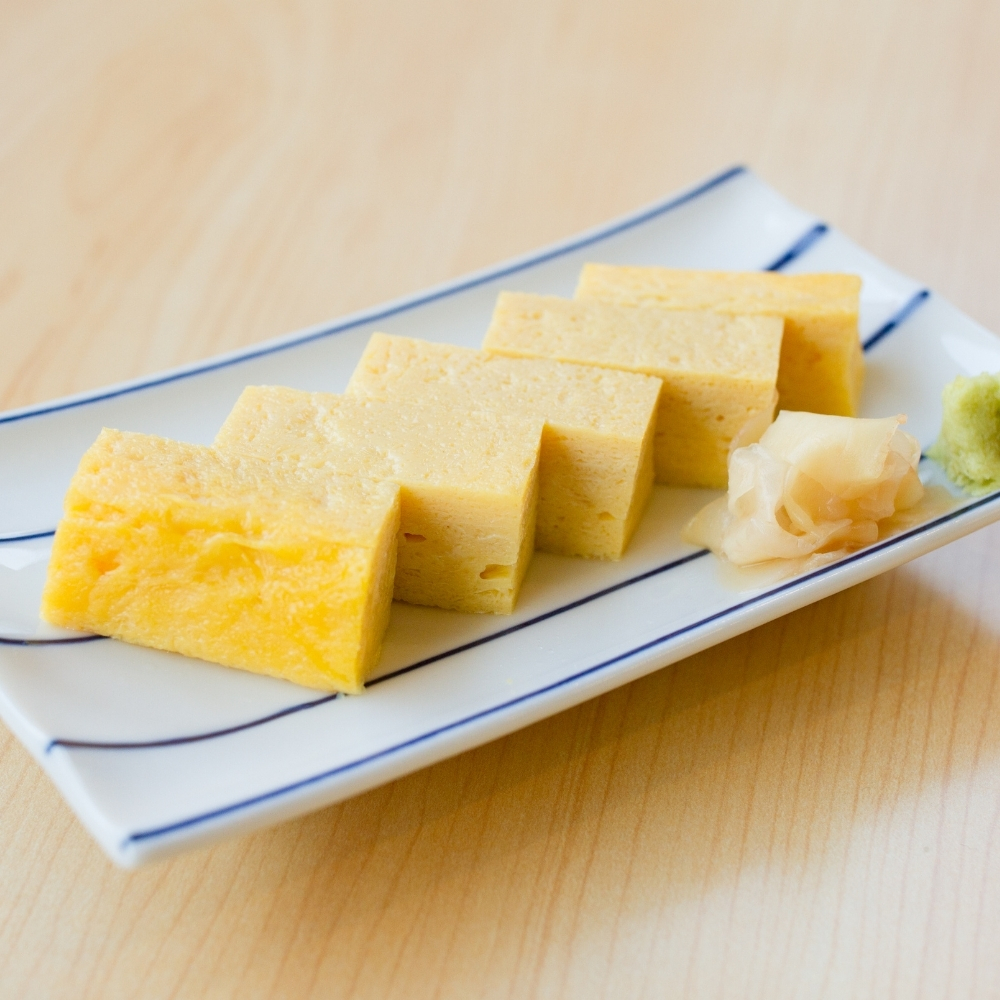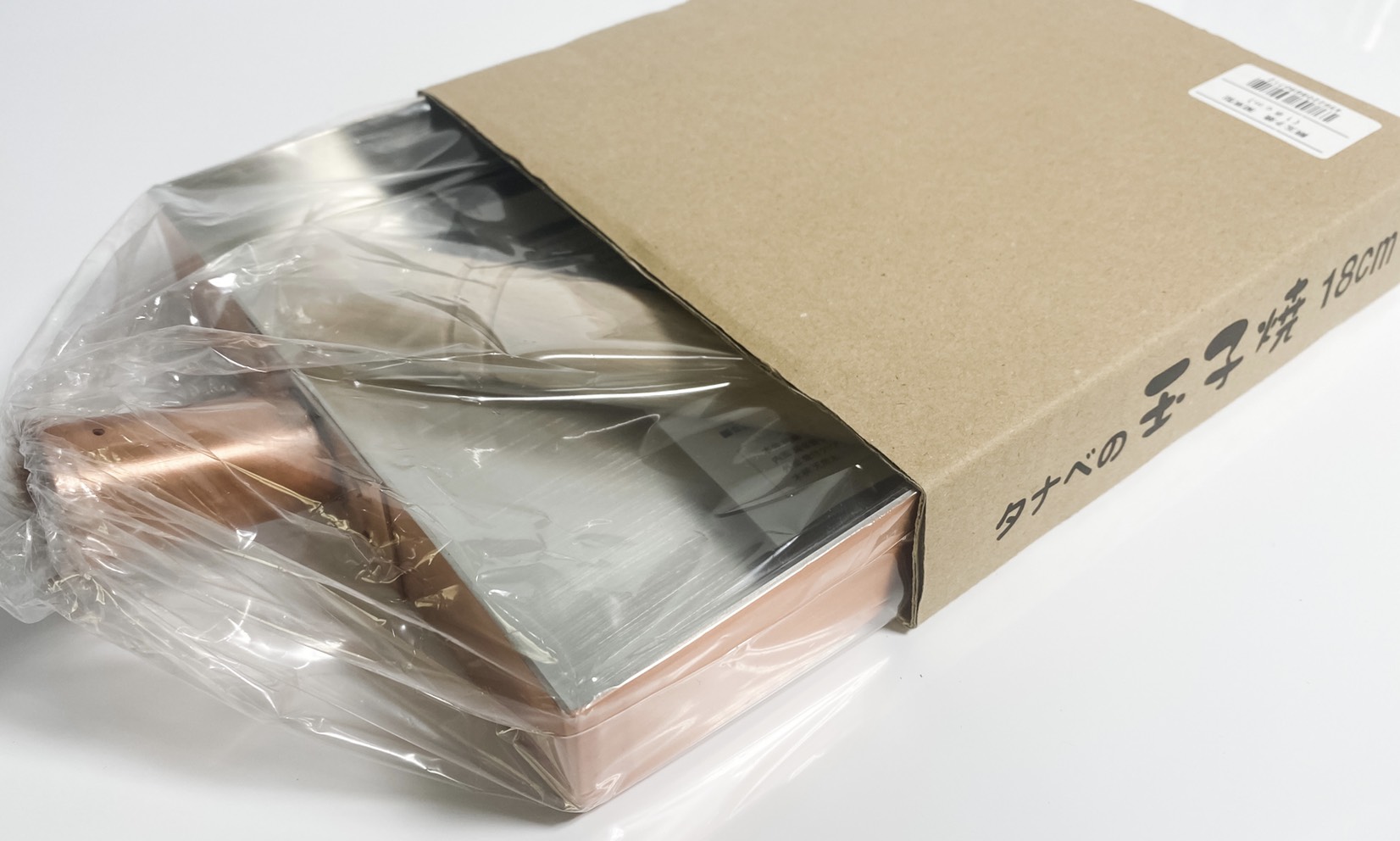
The copper tamagoyaki pan: the heart of tamagoyaki
known in Thailand as sweet egg or rolled egg
Tamagoyaki is one of the best-known signatures of traditional Japanese food, and we meet it in all sorts of dishes: in sushi at a fine restaurant,
in sushi from a convenience store, even made at home. It comes both savoury and sweet, according to taste,
and it is one of those Japanese dishes that anyone fond of Japanese food has to know.
But how many people know that making tamagoyaki is not always as sweet as the name suggests? It calls for a very high degree of care.
Some say you can spend a whole lifetime learning to make it. The equipment used to make it smooth and tender matters just as much as the technique, and that is why professionals use a copper pan of a particular shape.
Tamagoyaki pans, or rolled-omelette pans, come in many kinds on the market, in steel and in non-stick. But the tamagoyaki pan Japanese chefs use most widely, and the one that gives the best result, must be copper. Copper spreads heat quickly, so it suits cooking over low heat, keeping the easily-cooked egg under control so that it sets gradually and evenly, layer by layer. The result is tender in flavour, never tough, with none of the brown scorch spots that appear with other pans. Copper can fairly be called the ideal tool for making a flawless tamagoyaki.
Using your copper tamagoyaki pan for the first time
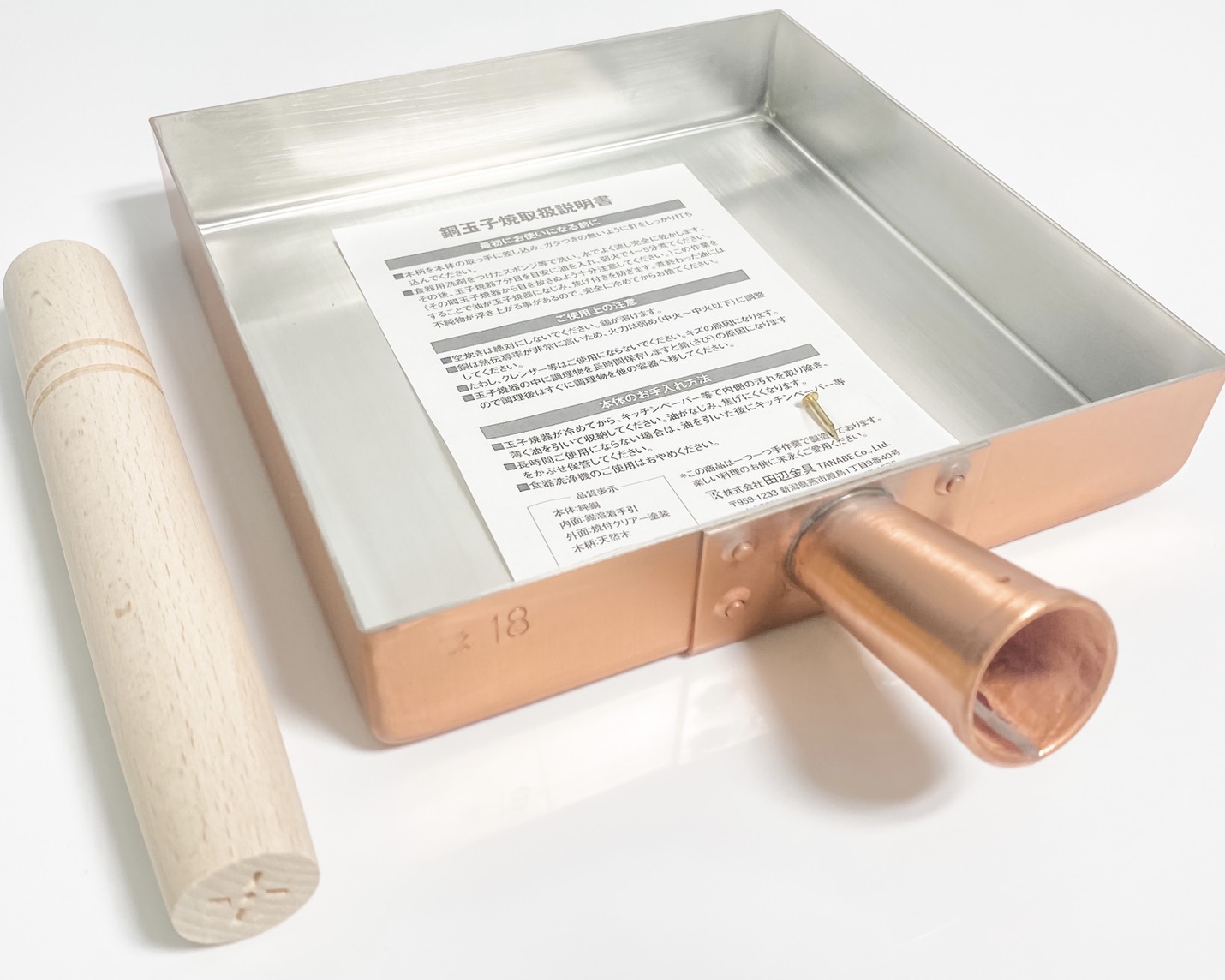
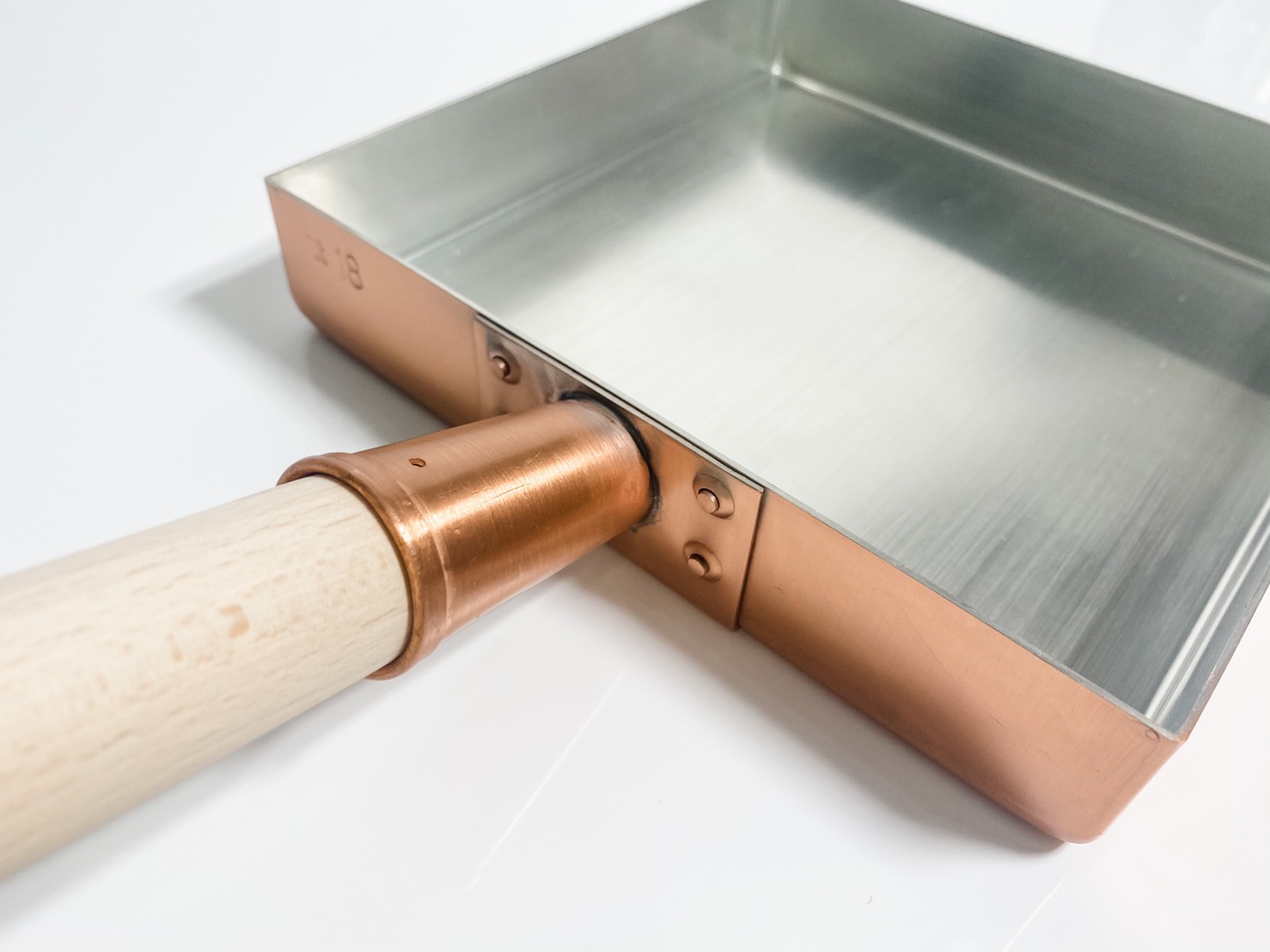
When you buy a copper tamagoyaki pan you will find the parts shown in the picture: the pan body, the wooden handle, and a tiny nail. First fit the wooden handle to the pan, then tap the tiny nail carefully into the hole provided. Be very careful: only one small nail is supplied, and losing it is a real nuisance. Tap gently, too, because copper is softer than other metals and striking too hard can deform the joint. After a period of use the handle may work loose from the pan; you can tap in a new nail later to tighten the joint.
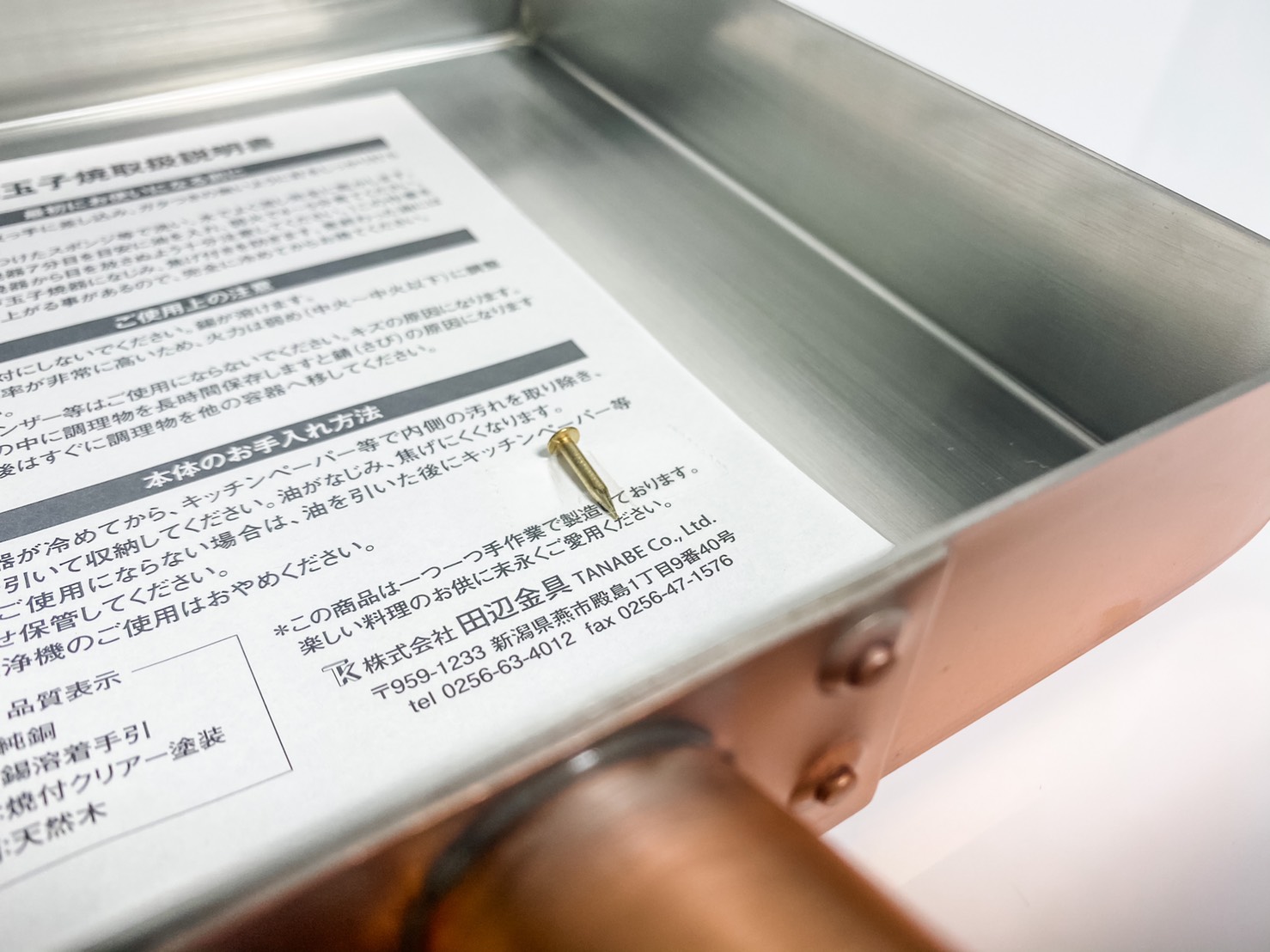
Washing and cleaning
Before the first use, wash the pan with a soft sponge and washing-up liquid to remove any dirt. This is the first time you will use washing-up liquid on your copper pan — and the only time in its working life, because from now on simply wiping it clean after each use is enough.
Coat it with a moderate amount of oil and leave it over low heat for 4-5 minutes before using it. Take care not to use too high a flame: copper conducts heat extremely well, and leaving it on the heat for a long time can scorch the pan very quickly.
Now you can start making tamagoyaki!
Once you have assembled, washed and oiled the pan, it is ready to use. A copper pan will give you tamagoyaki with beautiful colour, appetising to look at, and — most importantly — the tender flavour of the Japanese original. You will certainly enjoy making tamagoyaki in a copper pan!