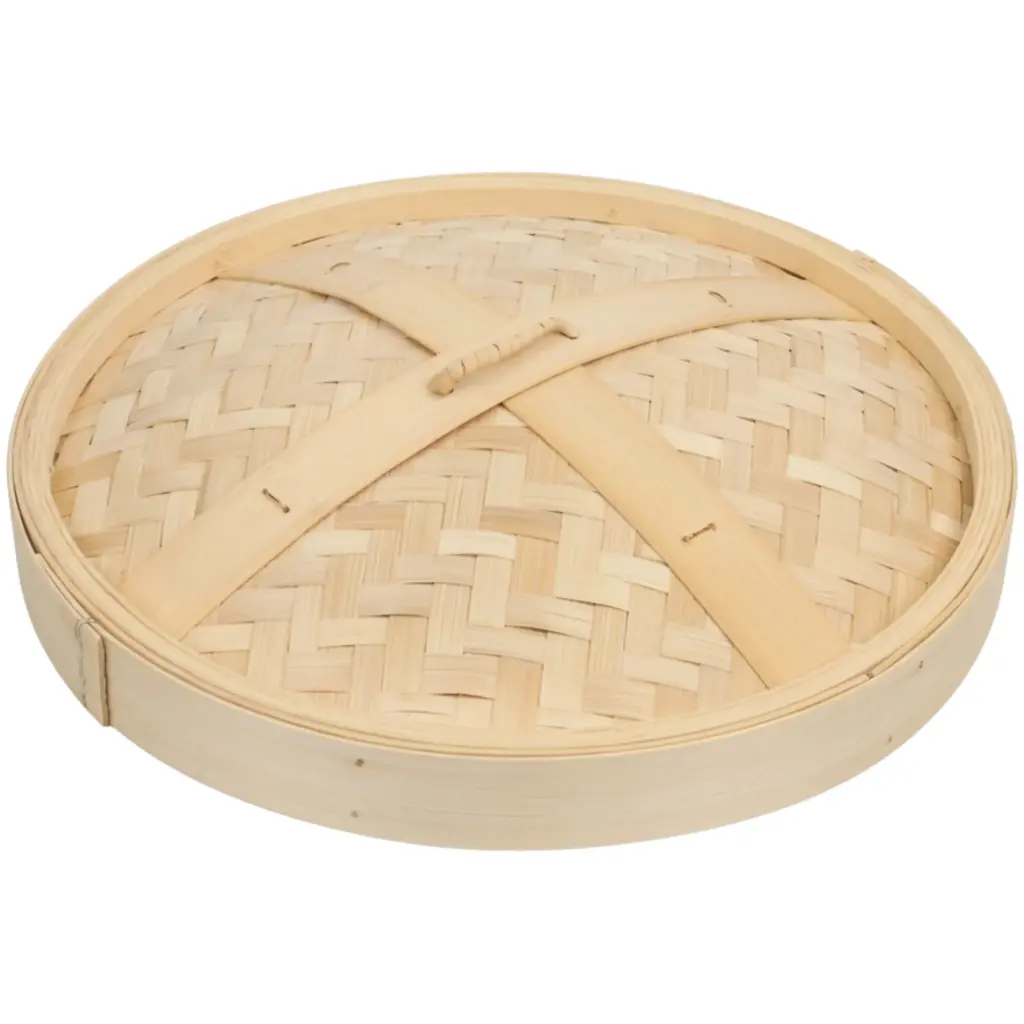
Dim sum steamer baskets are part of the eating culture of the East, passed down from generation to generation. Our role is to carry the wisdom of the past into the way people live in the 21st century
Where the word “dim sum” comes from The word dim sum is a combination of two words: dim (點, pronounced diǎn in Mandarin), meaning “to order” or “to touch”, and sum (心, pronounced xīn in Mandarin), meaning “heart”. Together they mean “order as your heart desires”. Dim sum is a southern Chinese cuisine of small, delicate portions served in little bamboo baskets — what we call dim sum steamers — such as siu mai, har gow and steamed buns, which are hugely popular, plus famous specialities (特色) such as duck feet. It is usually enjoyed slowly in the morning, “slow life” style, with hot tea such as oolong, Tieguanyin or Pu-erh. Some Chinese people even say that if you can't settle a matter in ordinary conversation, you should go for “yum cha” — drink tea with dim sum and talk things over slowly. This is because the everyday life of ordinary Chinese people is a hurried one of earning a living, so their speech tends to be blunt; to talk things over gently, they need to sit down together in a softer atmosphere.
The dim sum steamer basket has its own story too
The “dim sum steamer basket” is called 蒸籠 (zhēnglóng) in Mandarin. Zhēng means “to steam” and lóng means “basket”. The depth of the Chinese language lies in the fact that this is no ordinary basket: the character is made up of the bamboo radical on top and the character for “dragon” below. It is as if to hint that this bamboo basket is not for holding ordinary things — it is a dragon basket.
Hachanna's dim sum steamer baskets are made according to the philosophy that “elements bond only with their own element”, from the I Ching. There are 5 elements: earth, metal, water, wood and fire. All elements cycle, breaking down to become the source of one another — for example, wood burned by fire becomes earth. Each element has its own nature; if another element is inserted, they do not go together, and when they do not go together, durability is low. For example, when an iron nail is driven into wood, the iron is harder than the wood, so whenever either the wood or the iron moves, the wood is damaged, until eventually they no longer hold and come apart. This is why authentic traditional Chinese furniture does not contain a single iron nail. Hachanna's dim sum baskets are the same: every part is held together only by interlocking, weaving, or bamboo pegs.